




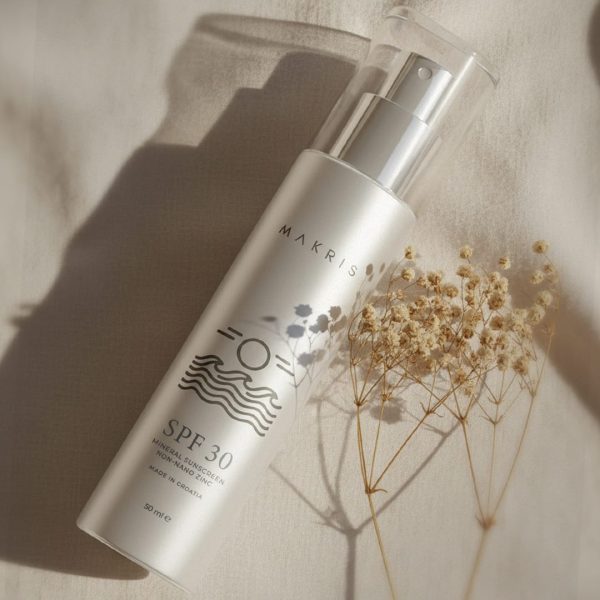
SPF 30
Mineral sunscreen
49,00 €
Product details
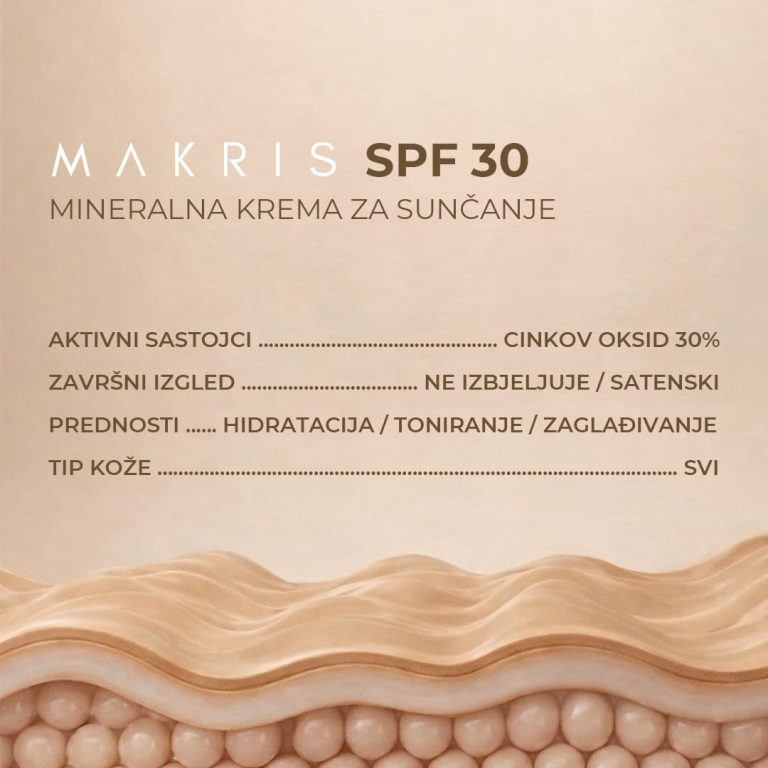
Tinted, 100% mineral, moisturizing skin cream - formulated with completely pure mineral zinc oxide, without nano particles and without the addition of chemical filters. Powerful and effective broad-spectrum protection against UV rays.
Natural, non-nano zinc oxide is suitable for protection against broad-spectrum ultraviolet rays, which is not always the case with chemical sunscreens that block only one type of UV light. Wild rose oil helps the skin restore its natural color and tone. In daily skin care, it hydrates and revitalizes the skin, increases elasticity and stimulates the growth of collagen. It is rich in essential fatty acids and carotenoids. It helps prevent wrinkles, and is successfully used for burns and skin damaged by UV rays, wrinkles, stretch marks, scars and age spots. Currant fruit oil has the property of absorbing UV rays, and has anti-inflammatory, repellent and cicatrizing effects (skin healing). It is a natural ally in protecting the skin from the sun and environmental influences
100% mineral and moisturizing sunscreen, provides broad spectrum SPF 30 natural protection to the skin, while providing an invisible, flawless and translucent tinted finish.
- provides broad-spectrum SPF 30 sun protection
- helps protect the skin from redness and aging caused by UV radiation
- provides a translucent tinted layer without a white trace
- easy to apply, blend and blend with the complexion
- leaves the skin hydrated and comfortable
- light, non-sticky texture
- suitable for all skin types
Ingredients
Aqua/Water, Zincoxide, Caprylic and Capric Triglyceride, Polyglyceryl-3 Polyricinoleate, Propanediol, Caprylic/Capric Triglyceride, Stearalkonium Hectorite, Simmondsia Chinensis Seed Oil, Coco-Caprylate, Prunus Armeniaca Kernel Oil, Polyhydroxystearic Acid, Polyglyceryl-3 Diisostearate, Pongamia Glabra Seed Oil, Rhus Verniciflua Peel Wax, Rosa Rubiginosa Seed Oil, Oryzanol, Phenoxyethanol, Tocopheryl Acetate, Xanthan Gumm, Propylene Carbonate, Citric acid, CI 77891, CI 77491, CI 77492, CI 77499, Ethylhexylglycerin, Sodium Phytate, Rosmarinus Officinalis Leaf Extract, Alcohol Denat
Active Ingredients
Non-nano zinc oxide
- broad-spectrum ultraviolet protection
- helps with inflammation, irritation and redness
- cares for problematic and acne-prone skin
Rosehip oil
- helps the skin regain its natural color and tone
- hydrates and revitalizes the skin
- increases elasticity and stimulates collagen growth
- helps prevent wrinkles
- helps with burns and skin damaged by UV rays
Currant fruit oil
- UV absorption property
- anti-inflammatory, repellent effect
- cicatrizing effect (heals the skin)
- helps protect the skin from the sun and environmental influences
Instruction Manual
Apply evenly to face and décolleté before sun exposure. Repeat application every 2 hours or in summer, after swimming and sweating. Avoid prolonged sun exposure even when using sunscreen.
Best used 6 months after opening.
Store tightly closed, protected from light at a temperature up to 25°C.


Personalized skin care routine
Find yoursFrequently asked questions
What is SPF 30?
SPF 30 is a tinted, 100% mineral, moisturizing skin cream – formulated with completely pure mineral zinc oxide, without nanoparticles and without the addition of chemical filters. Also known as sun blocker – sunblock, sun lotion or sunscreen. A photoprotective product for topical application to the skin that helps protect against sunburn and prevent skin cancer. It has strong and effective broad-spectrum protection against UV rays.
What is the difference between chemical and SPF 30, mineral sunscreens?
For people with sensitive skin, dermatologists recommend mineral sunscreens, also called physical sunscreens. They are suitable for broad-spectrum ultraviolet protection. The primary difference between these sunscreens is the active ingredients they contain. If the active ingredient in a sunscreen is zinc oxide, it is a mineral, physical sunscreen. Chemical sunscreens do not contain titanium dioxide or zinc oxide and usually block only one type of UV light.
Who needs sunscreen?
Everyone. Using sunscreen can help prevent skin cancer by protecting against the sun’s harmful ultraviolet (UV) rays. Anyone can get skin cancer, regardless of age, gender, or skin tone. Sunscreen can also help prevent premature skin aging, such as wrinkles and age spots, caused by overexposure to unprotected UV radiation.
Is a high SPF number better than a low one?
Dermatologists recommend using a sunscreen with an SPF of at least 30, which blocks 97% of the sun’s UVB rays. Higher-numbered SPFs block slightly more of the sun’s UVB rays, but no sunscreen can block 100% of the sun’s UVB rays. It’s also important to remember that high-numbered SPFs last just as long as low-numbered SPFs. A high SPF doesn’t allow for additional time spent outdoors without reapplying. Since only about 20-50% of the amount of sunscreen is often applied, applying a high-SPF sunscreen can help compensate for this underapplication, but it’s a good idea to check the chemical composition. Sunscreen should be reapplied approximately every two hours when outdoors, even on cloudy days and after swimming or sweating.
When to use SPF 30?
SPF 30 sunscreen can be applied every day to exposed skin when outdoors. The sun emits harmful UV rays all year round. Even on cloudy days, up to 80% of the sun’s harmful UV rays can penetrate clouds.
How much SPF 30 should you use and how often should you apply it?
Most adults need at least 30 ml of sunscreen – about the amount of a shot glass – to completely cover the skin not covered by clothing. Depending on your body size, you may need more sunscreen to protect exposed skin.
- Don’t forget to apply it to the tops of your feet, neck, ears and top of your head.
- Apply sunscreen to dry skin 15 minutes before going outside.
- Reapply sunscreen about every two hours or after swimming or sweating, according to the instructions on the bottle.
- Skin cancer can also occur on the lips. To protect your lips, you can apply a Multi-Stick lip balm or lipstick that contains sunscreen with an SPF of 30 or higher.
SPF 30 protects against both UVA and UVB rays. What is the difference between these rays?
Sunlight is made up of two types of harmful rays that reach the Earth – UVA and UVB rays. Overexposure to either can lead to skin cancer. In addition to causing skin cancer, here’s what each of these rays does:
- UVA rays (or aging rays) can prematurely age your skin, causing wrinkles and age spots, and can pass through window glass.
- UVB rays (or burning rays) are the main cause of sunburn and are blocked by window glass.
Should I protect myself from visible sunlight?
Visible sunlight can increase skin darkening, also known as hyperpigmentation, especially in people with darker skin tones. To protect ourselves from visible light, we can seek shade, wear sun-protective clothing, and apply a tinted SPF 30 sunscreen.
11 reviews for SPF 30
| 5 star | 100% | |
| 4 star | 0% | |
| 3 star | 0% | |
| 2 star | 0% | |
| 1 star | 0% |
Only logged in customers who have purchased this product may leave a review.
Related products
-

Gift Card
Price range: 50,00 € through 200,00 € Select options This product has multiple variants. The options may be chosen on the product pageGift voucher
-
Honeymoon
32,00 € Select options This product has multiple variants. The options may be chosen on the product pageBody oil • 100ml
-
Second Skin
49,00 € Select options This product has multiple variants. The options may be chosen on the product pageBB cream • 30ml


Dajana I. (✅) –
Malo je reci SAVRŠENO!!!